
Manage Your Energy Price Risk
Hedge Gas & Oil Price Exposure within a Volatile Geopolitical Market
War on energy prices
The global gas and fuel markets have had a volatile start to 2026. Geopolitical events, including the US takeover in Venezuela and the bombings in the Middle East, have had a direct impact on energy prices, causing spikes and shortages across the globe.
Energy producers have reacted, using this instability as an opportunity to lock in sell prices for the future. At the same time, consumers are looking to protect themselves against further spikes in the future, buying protection and hedging through fixed price contracts.

Managing price risk in volatile markets
At GRM, we have supported the deployment of price risk management strategies across the market, helping customers to capitalize on higher future sell prices that maximise profits.
Whether you are an energy producer or consumer, we deliver risk management solutions with a precise understanding of regional market dynamics. For consumers concerned about the unpredictability of energy prices, our experts can help craft customised hedging solutions to shield your business from the risk of future price spikes.
Gas Producers: Use today’s volatility to secure tomorrow’s margins
With supply already tight in the wake of the 2022 Russian invasion of Ukraine and the harsh winter conditions in the US and Europe in 2025/2026, the market has seen more extreme levels of volatility and insecurity.
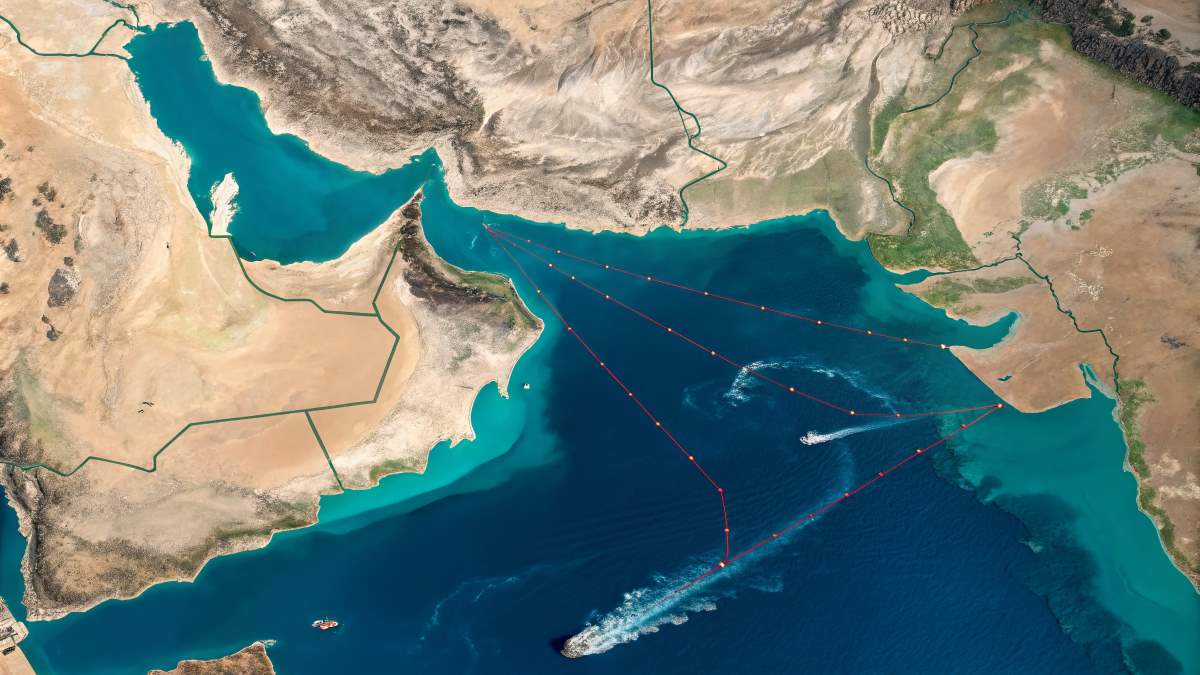
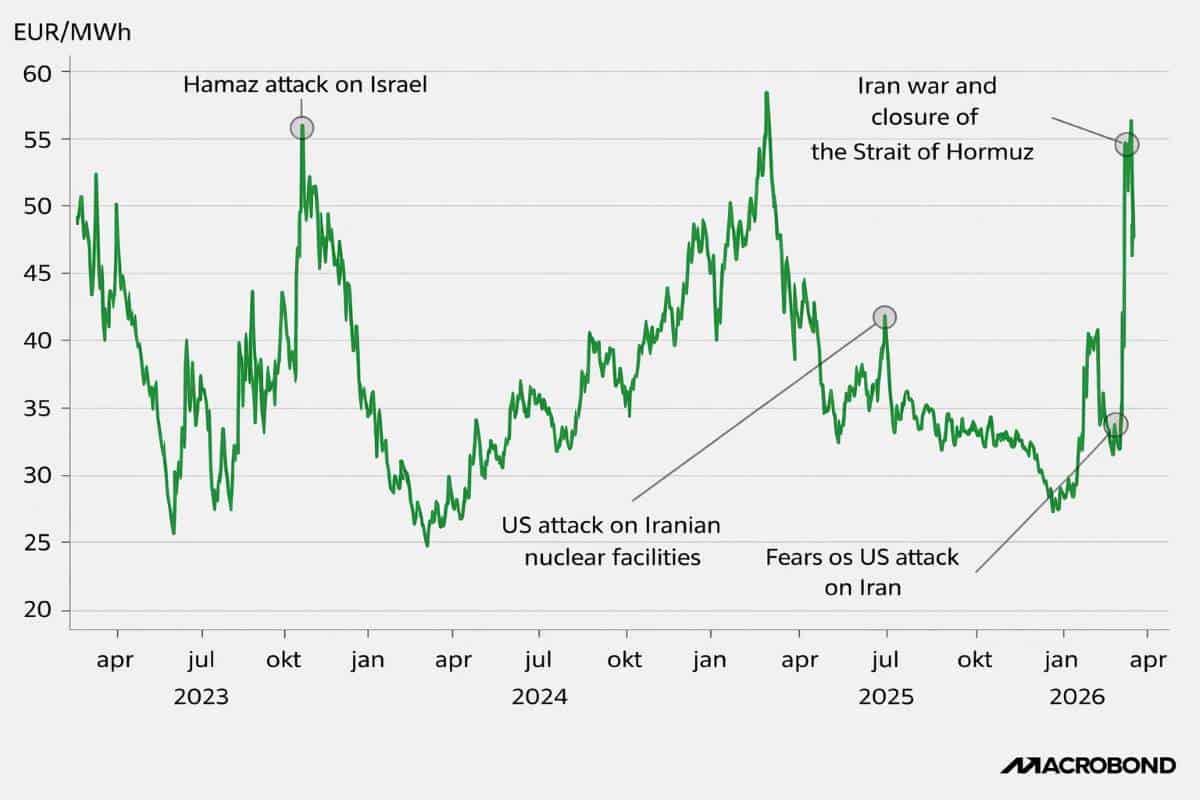
The closure or near-closure of the Strait of Hormuz caused TTF front-month to jump 20–50% intraday, with 36% daily gains recorded as European buyers scrambled for cargoes. Up to 20% of global LNG became “effectively trapped,” creating extreme volatility.

Gas Consumers: TTF price surges and LNG outages – hedging can shield you from market chaos
Europe needs ~30% more gas than 2025 to refill storage, while inventories have fallen to precarious levels (Germany: as low as 24%, EU ~35%). This raises structurally bullish pressure on 2026/27 pricing and increases hedging urgency.
Extreme cold in the US slashed LNG feedgas by ~40%, tightening global balances. Combined with cold European weather spells, this triggered repeated price spikes and reinforced sensitivity to short-term supply disruptions.
Drone strikes forced QatarEnergy to halt parts of its LNG output – critical because Qatar supplies major volumes to both Europe and Asia. Markets quickly repriced for multiweek outages, pushing TTF back above €50/MWh and driving the forward curve higher for all 2026 contracts.
GRM in the media
Many international media channels and journalists have invited our Chief Analyst & Head of Research, Arne Lohmann Rasmussen, to share his expert insights on the oil, gas, and energy markets. Click a logo to see our specialist commentary:

Iran to close the Strait of Hormuz: It could be costly for Denmark.

Maduro overthrow in oil-rich Venezuela unlikely to shake energy markets in the near term.

Strait of Hormuz ship traffic slows to a crawl. Here’s what to know about the key oil waterway.

Strait of Hormuz: What happens if Iran shuts global oil corridor?

European Union’s US gas use set to soar, increasing price volatility.

Missile fears slow traffic in the Strait of Hormuz – energy prices rise.
Stay Ahead of the Curve with
GRM Market Insights
In the fast-paced world of energy trading, knowledge is power!
Our Market Insights give you a competitive edge with analysis and expert forecasts.
Watch our webinar on how the war in the Middle East affects the market.
Energy market shocks and product price surge
Gasoil and diesel market reports in March indicated that the Strait of Hormuz was effectively closed, with Iran threatening to fire on vessels, leaving tankers stranded on both sides. This immediately drove large price swings in Brent, including sharp drops from above USD 80 to below USD 76 before rebounding, a clear sign of unprecedented geopolitically driven volatility.
Attacks on Saudi Arabia’s Ras Tanura refinery and QatarEnergy LNG infrastructure created a severe global product shortage. ICE gasoil surged by 25% in a single session, massively outperforming crude. This divergence highlights how product markets now react more violently than crude during conflict scenarios.
China then suspended exports of refined products, causing a major global supply shock. The diesel and jet fuel crisis escalated as ICE gasoil rose 47%, with prices up 75% year to date due to the supply loss. This amplified global oil price instability and exposed the fragility of geopolitical supply chains.
Energy producers: Lock in higher future selling prices
Traders are increasingly pricing in a multimonth closure of key routes and a growing risk of further escalation. These conditions have attracted speculative inflows that drive intraday Brent spikes even as equity markets weaken.
Many factors now point to war risk premiums dominating normal supply and demand logic. For energy producers and suppliers, this environment creates an opportunity to lock in higher future selling prices while forward markets remain elevated and volatile.


GRM: Reliable price risk management services
Hedging strategies provide a reliable framework for capitalising on price spikes in natural gas. Producers can lock in higher selling prices for future production through financial instruments such as futures, swaps, or options. These mechanisms offer gas producers both budget security and margin predictability.
These financial instruments also provide budget security to consumers, offsetting the financial risks associated with natural gas price fluctuations. Businesses can protect against adverse market movements through, for example, a forward contract to lock in prices, maintain predictable costs, and secure operational stability.
Whether your company seeks to capitalize on, or protect against price volatility in oil or gas, our specialists can help you execute a customised price risk management strategy.
Specialist insights on oil, gas, and energy markets
Our team of expert analysts and researchers ensure that our traders and our customers receive the best and latest insights on the market.
Over 1000 people around the world have signed up for our newsletter, which covers expert analyses on oil, gas and energy markets.
We also host regular webinars throughout the year to explore our market outlook and the impact of geopolitics and other macro-economic events.

Schedule a meeting
Fill out the form and we will get back to you to schedule a meeting
By submitting the form, I accept that A/S Global Risk Management Ltd. Fondmæglerselskab may contact me. I may withdraw my consent at any time by reaching out to heding@global-riskmanagement.com.
Get in touch with our experts


FAQ
How can I, as a producer, lock in today’s favorable market conditions on oil and gas prices?
When geopolitical tension pushes oil and gas prices to elevated, but volatile, levels, many producers actively secure these favorable conditions to protect future earnings. By proactively managing price risk in this way, producers can stabilize cash flows, protect investment plans and continue operations with greater financial certainty despite market volatility.
How can I structure a hedging programme that supports stable margins during geopolitical instability?
A well‑structured programme aligns your protection strategy with your production schedule, giving you greater certainty. The aim is always to cushion your business from large swings caused by conflict‑related shocks and to ensure that your long‑term planning is not derailed by short‑term geopolitical events.
How can I protect today’s strong prices without giving up all potential upside?
By implementing hedging strategies such as fixed-price contracts, swaps or option structures (e.g. put or collars), producers can lock in attractive price levels while maintaining some upside exposure. This approach ensures a “revenue floor”, reducing vulnerability to sudden price corrections that often follow geopolitical spikes – such as disruptions linked to the Strait of Hormuz.
What is the most cost‑effective way to take advantage of rising prices during regional disruption?
When events in the Middle East affect supply chains and energy flows, markets often move quickly. Many producers respond by locking in part of their future output at favourable levels. This can transform short‑lived spikes caused by route closures, missile risks or shipping delays into more predictable long‑term revenue.
Which instruments are commonly used by producers in times of geopolitical tension?
Producers typically rely on straightforward financial tools designed to smooth out unpredictable markets. The goal is not to speculate on the outcome of the conflict, but to create more certainty around future cashflows when prices are being driven by regional unrest, export interruptions or energy bottlenecks.
What should I consider in such a volatile environment?
Producers often factor in risks such as transport delays, insurance challenges, regional price differences and currency movements. In conflict periods, even small shifts in the energy supply chain can influence how well a risk‑management approach performs.
What are my options as a buyer when the Middle East conflict is causing extreme price swings?
Geopolitical disruption can lead to abrupt increases in oil and gas prices, especially when shipping routes or production sites are affected. Buyers often respond by stabilising part of their future costs, giving them greater certainty over budgeting and supply even when markets move sharply in reaction to conflict‑related news.
How can I protect my business without losing the benefits of backwardation during this crisis?
When forward prices are lower than spot prices – a common situation during severe market stress — some buyers spread their hedge across several time periods. This helps them secure more stable future costs while still taking advantage of favourable price structures created by ongoing volatility caused by geopolitical tensions.
What can I do if supply disruptions push prices higher due to instability in the Middle East?
When outages or shipping challenges drive prices up, some buyers choose to secure part of their expected consumption in advance. This approach helps mitigate the risk of sudden surges driven by events such as transport interruptions, fuel facility shutdowns or increased security premiums around the Strait of Hormuz.
Which tools can help me manage rising or unpredictable energy costs during the conflict?
Buyers often rely on financial tools, like forwards, call options / collars or swaps, that protect them from extreme upward movements or transform volatile daily prices into more predictable future costs. These approaches can help maintain stability even when the regional situation causes renewed spikes in global energy markets